
WHAT I’M READING NOW
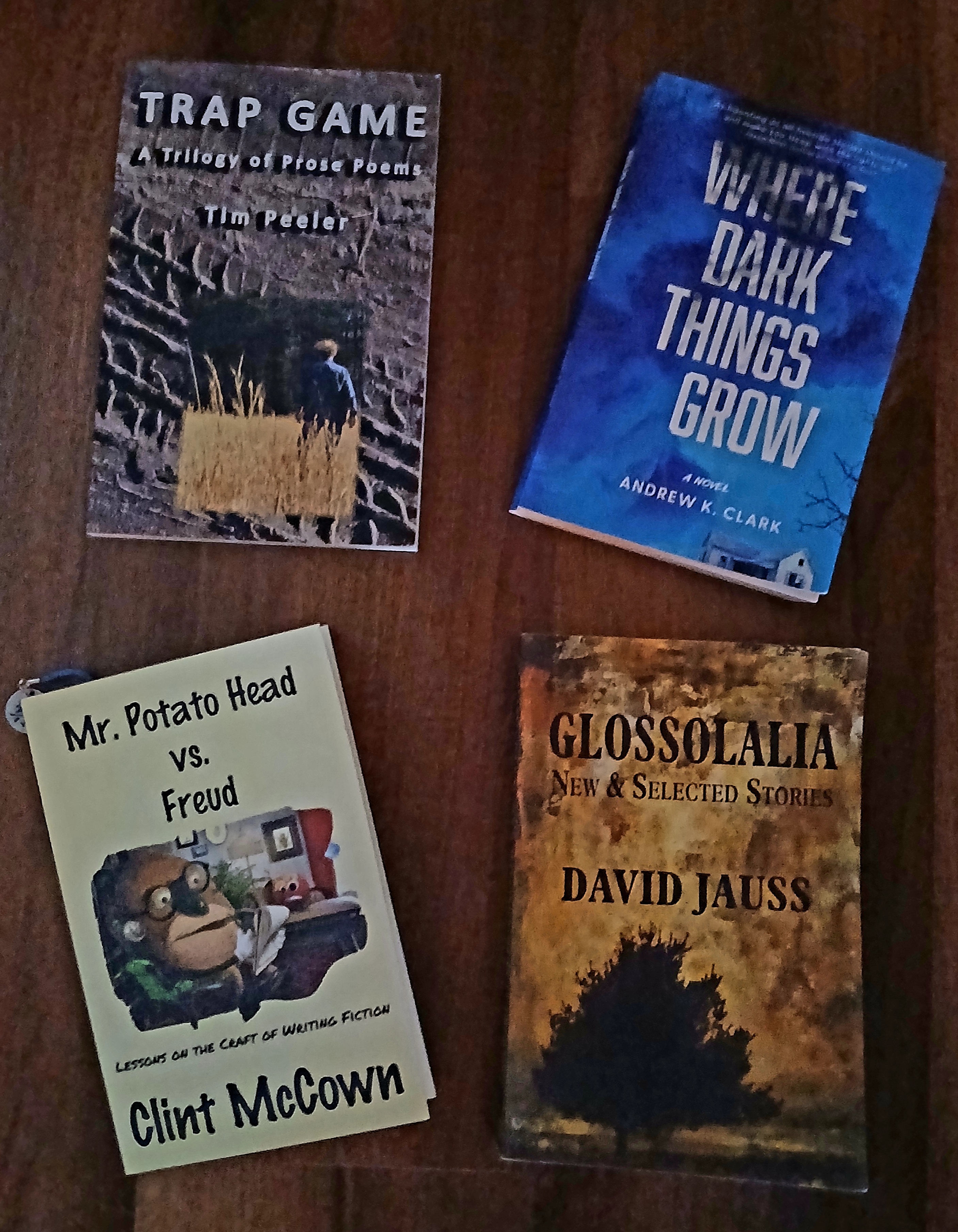
I’m so excited to recommend these wonderful works from four excellent authors! Let’s get right to my reviews!
Trap Game: A Trilogy of Prose Poems by Tim Peeler will keep you reading until the wee hours. At least, that’s what it did to me. Peeler is a master of pentameter, a form in which every line consists of a specific number of syllables. Yet, this form is invisible as you read his accessible poems, each of which is a perfectly encapsulated short story. For anyone who is new to reading and understanding poetry, this collection is for you! And, for anyone studying the craft or who is well-versed in writing poetry, this collection is also for you!
In “Rath,” Peeler’s narrator talks of his Uncle “Rath” Rathbone, an NBA star for the Celtics, who later hired the narrator to work on his company’s landscape crew, sometimes through harrowing incidents.
“We’d gone to Traphill / To climb on the rock.
Stopped the gravel road / To snap Rath’s picture
Front of a corn field / Tallest corn
We’d ever seen / Rath held his hand up
Like a preacher blessing / A circle of crows” (22).
Such striking scenes seemingly come easy in Peeler’s most recent collection set in Western North Carolina and the Piedmont.
“Where Lions Prowl,” is a poem that is, at times, laugh-out-loud funny as it depicts two young poets, perhaps frenemies, who bear both appreciation and a competitive spirit for one another’s work.
Perhaps my favorite from this collection—though I’d be hard pressed to commit to a favorite, as each of these prose poems have stuck with me since reading the collection (three times, to date—it’s that good!)—is “When Sparky Comes Back,” a ghost story of a poem, about the narrators friend, Sparky, who died of an overdose when they were college-aged, and how, years later, Sparky comes back to set the story straight late one night on the narrator’s front porch. Powerful stuff!
And while we’re speaking of ghostly things, be absolutely sure to add Andrew K. Clark’s haunting debut novel, Where Dark Things Grow, to your TBR list. And put it at the top! This creepy-in-a-good-way story combines mountain folklore with mystical realism and a coming-of-age story as it relates the story of fifteen-year-old Leo and his girlfriend Lilyfax. Set in Western North Carolina during the Great Depression of the 1930’s, Leo must overcome poverty, self-doubt, and magical powers to save the area’s young women—including his own Lilyfax—from human traffickers with supernatural powers. It’s a good versus evil story full of vivid imagery that will keep you reading way past your bedtime—and then it still may keep you awake, watching for shadows in the darkness.
“The hour grew close to midnight, the night starless, a thin silver moon offering only a slash of resistance to the enveloping darkness. Leo crossed the creek and headed up the ridge toward Farmer Johnson’s, the Shadow Wulver padding lithely behind him, its tail high, grazing the tallest limbs in the trees” (170).
Any list of “must reads” from me would, of course, be incomplete without mentioning a short-story collection, and Glossolalia: New & Selected Stories by David Jauss does more than simply check the box. The award-winning stories in this collection are down-right admirable in their simple complexity. From the first line of each story—which immediately captures you—to endings that snatch your breath away, these stories will make you think them, and about the human condition, long after you’ve closed the book’s cover. Take “Torque,” for example:
“The day after his wife left him, taking their three-year-old son with her, Larry Watkins took out his circular saw, attached the metal-cutting blade, and carefully sawed his 1974 Cadillac Fleetwood in half” (1).
Who can possibly stop reading after a first line like that?
Some of these stories deal powerfully with familial heartache, including “Brothers,” which relates the story of brothers whose relationship is cleaved over their passionate love for the same woman, and the title story “Glossolalia,” (which means speaking in tongues), that tells of a sixteen-year-old boy bearing witness to his father’s nervous breakdown.
It’s no surprise that these memorable stories appear in such reputable literary journals as Crazyhorse, The Iowa Review, and Prairie Schooner, to name a few, but some also are included in The O. Henry Awards and Best American Short Stories and have won Pushcart Prizes—all well-deserved honors for such a masterful collection!
You likely know I’m always reading (or re-reading) at least one good craft-of-writing book, and Clint McCown’s Mr. Potato Head vs. Freud: Lessons on the Craft of Writing Fiction is my current deep-dive into writing self-education. The humorous title is taken from McCown’s concise essay on characterization, previously appearing in The Writer’s Chronicle.
Reading this group of pertinent lessons is less like taking a course in writing and more like a jovial, yet educational, conversation over coffee with the author of your dreams. McCown’s essays are relatable, intelligent, and above all, instructive, all while maintaining a jolly tone that prevents any writer from feeling overwhelmed.
McCown succinctly addresses the basics such as beginnings, endings, the aforementioned characterization, and plot, but also provides guidance that many writing-craft books leave out: the editor’s viewpoint, writer’s block, and inspiration. And a wonderful chapter that can benefit every writer is titled “A Writer’s Checklist,” may prevent even the best of authors from overlooking a simple element that could trip up their work, such as this reminder about backstory:
“Traumas echo forward. This is an important truth about backstory. Every choice you make about a character’s past is rock you’re dropping into the pond of the story. The size of the rock will vary, and the bigger the rock, the larger the ripple effect will be in the life of the character” (119).
Whether you’re a seasoned author, a writing teacher, or someone who is just preparing to write their first story, this collection of instructional essays will have you attacking your keyboard with increased confidence that your story will be stronger for the reading.
Let me know when you read one (or all!) of the wonderful works by these awesome authors. I look forward to reading your reviews of their work, as well!




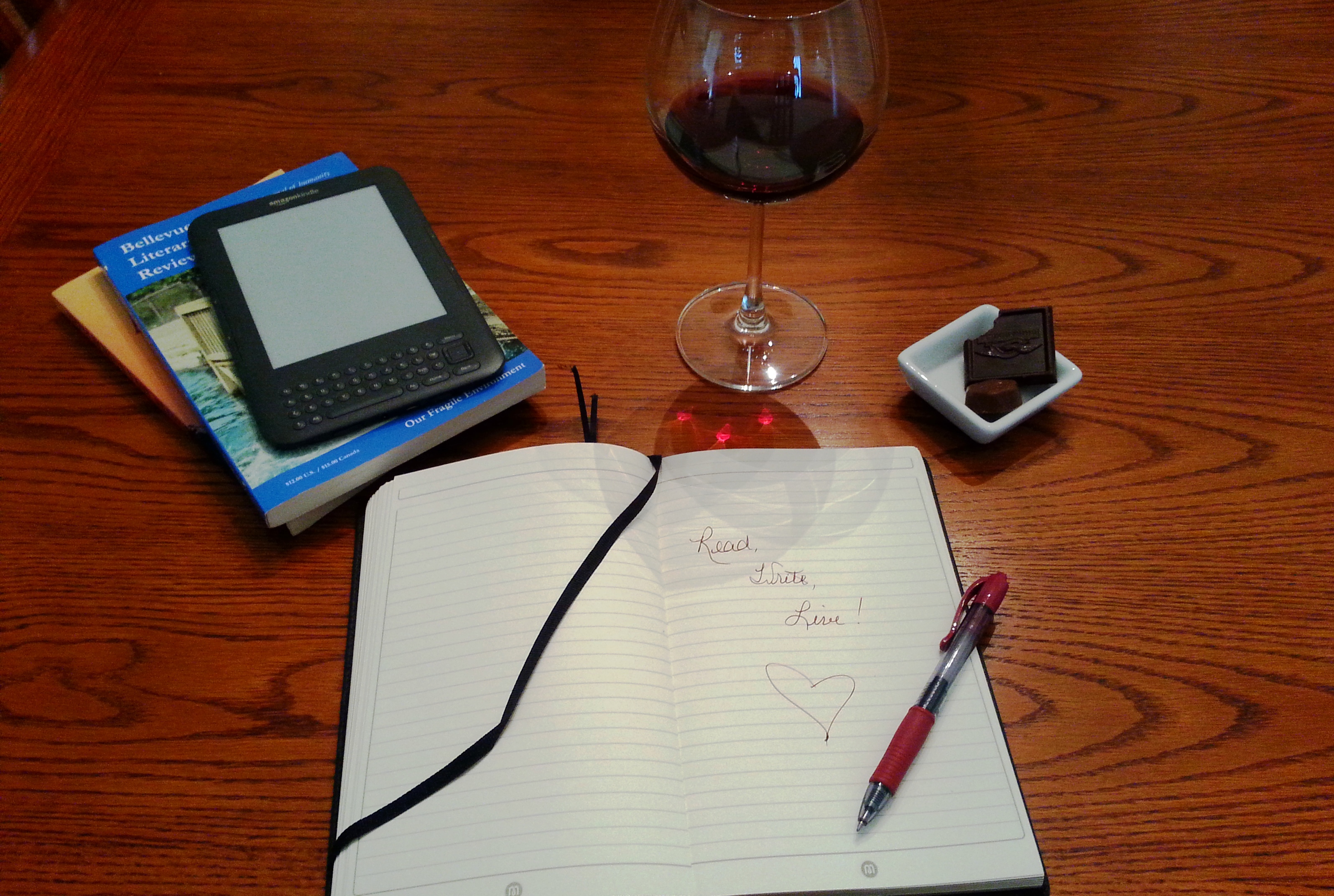
 Read. Write. Live!