Join me at Barley Market Hickory for Books & Beers!

More information and a complete list of on-tap and other craft beer and wine offerings at Barley Market Bottle Shop & Tasting Room can be found at https://www.shopbarley.com/barley-hickory. Come and enjoy this fabulous venue while I tell you a story. I hope to see you there!

Cheers!

Four Must-Reads Reviewed!

WHAT I’M READING NOW

I’m so excited to recommend these wonderful works from four excellent authors! Let’s get right to my reviews!

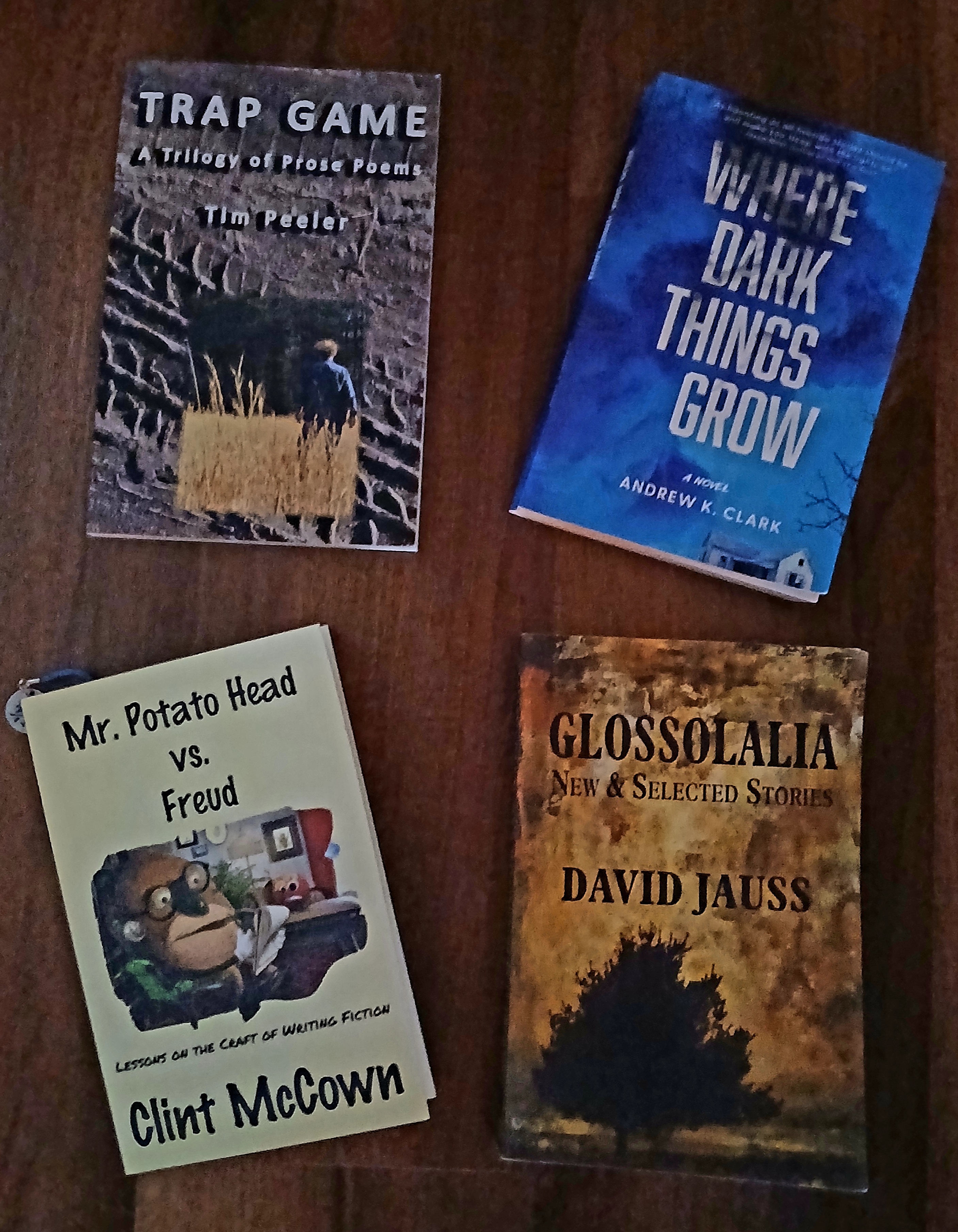
Trap Game: A Trilogy of Prose Poems by Tim Peeler will keep you reading until the wee hours. At least, that’s what it did to me. Peeler is a master of pentameter, a form in which every line consists of a specific number of syllables. Yet, this form is invisible as you read his accessible poems, each of which is a perfectly encapsulated short story.  For anyone who is new to reading and understanding poetry, this collection is for you! And, for anyone studying the craft or who is well-versed in writing poetry, this collection is also for you!

In “Rath,” Peeler’s narrator talks of his Uncle “Rath” Rathbone, an NBA star for the Celtics, who later hired the narrator to work on his company’s landscape crew, sometimes through harrowing incidents.
               

                “We’d gone to Traphill / To climb on the rock.
                Stopped the gravel road / To snap Rath’s picture
                Front of a corn field / Tallest corn
                We’d ever seen / Rath held his hand up
                Like a preacher blessing / A circle of crows”
(22).

Such striking scenes seemingly come easy in Peeler’s most recent collection set in Western North Carolina and the Piedmont.

“Where Lions Prowl,” is a poem that is, at times, laugh-out-loud funny as it depicts two young poets, perhaps frenemies, who bear both appreciation and a competitive spirit for one another’s work.

Perhaps my favorite from this collection—though I’d be hard pressed to commit to a favorite, as each of these prose poems have stuck with me since reading the collection (three times, to date—it’s that good!)—is “When Sparky Comes Back,” a ghost story of a poem, about the narrators friend, Sparky, who died of an overdose when they were college-aged, and how, years later, Sparky comes back to set the story straight late one night on the narrator’s front porch. Powerful stuff!

And while we’re speaking of ghostly things, be absolutely sure to add Andrew K. Clark’s haunting debut novel, Where Dark Things Grow, to your TBR list. And put it at the top! This creepy-in-a-good-way story combines mountain folklore with mystical realism and a coming-of-age story as it relates the story of fifteen-year-old Leo and his girlfriend Lilyfax. Set in Western North Carolina during the Great Depression of the 1930’s, Leo must overcome poverty, self-doubt, and magical powers to save the area’s young women—including his own Lilyfax—from human traffickers with supernatural powers. It’s a good versus evil story full of vivid imagery that will keep you reading way past your bedtime—and then it still may keep you awake, watching for shadows in the darkness.

“The hour grew close to midnight, the night starless, a thin silver moon offering only a slash of resistance to the enveloping darkness. Leo crossed the creek and headed up the ridge toward Farmer Johnson’s, the Shadow Wulver padding lithely behind him, its tail high, grazing the tallest limbs in the trees” (170).

Any list of “must reads” from me would, of course, be incomplete without mentioning a short-story collection, and Glossolalia: New & Selected Stories by David Jauss does more than simply check the box. The award-winning stories in this collection are down-right admirable in their simple complexity. From the first line of each story—which immediately captures you—to endings that snatch your breath away, these stories will make you think them, and about the human condition, long after you’ve closed the book’s cover. Take “Torque,” for example:

                “The day after his wife left him, taking their three-year-old son with her, Larry Watkins took out his circular saw, attached the metal-cutting blade, and carefully sawed his 1974 Cadillac Fleetwood in half” (1).

Who can possibly stop reading after a first line like that?

Some of these stories deal powerfully with familial heartache, including “Brothers,” which relates the story of brothers whose relationship is cleaved over their passionate love for the same woman, and the title story “Glossolalia,” (which means speaking in tongues), that tells of a sixteen-year-old boy bearing witness to his father’s nervous breakdown.

It’s no surprise that these memorable stories appear in such reputable literary journals as Crazyhorse, The Iowa Review, and Prairie Schooner, to name a few, but some also are included in The O. Henry Awards and Best American Short Stories and have won Pushcart Prizes—all well-deserved honors for such a masterful collection!

You likely know I’m always reading (or re-reading) at least one good craft-of-writing book, and Clint McCown’s Mr. Potato Head vs. Freud: Lessons on the Craft of Writing Fiction is my current deep-dive into writing self-education. The humorous title is taken from McCown’s concise essay on characterization, previously appearing in The Writer’s Chronicle.

Reading this group of pertinent lessons is less like taking a course in writing and more like a jovial, yet educational, conversation over coffee with the author of your dreams. McCown’s essays are relatable, intelligent, and above all, instructive, all while maintaining a jolly tone that prevents any writer from feeling overwhelmed.

McCown succinctly addresses the basics such as beginnings, endings, the aforementioned characterization, and plot, but also provides guidance that many writing-craft books leave out: the editor’s viewpoint, writer’s block, and inspiration. And a wonderful chapter that can benefit every writer is titled “A Writer’s Checklist,” may prevent even the best of authors from overlooking a simple element that could trip up their work, such as this reminder about backstory:

“Traumas echo forward. This is an important truth about backstory. Every choice you make about a character’s past is rock you’re dropping into the pond of the story. The size of the rock will vary, and the bigger the rock, the larger the ripple effect will be in the life of the character” (119).

Whether you’re a seasoned author, a writing teacher, or someone who is just preparing to write their first story, this collection of instructional essays will have you attacking your keyboard with increased confidence that your story will be stronger for the reading.

Let me know when you read one (or all!) of the wonderful works by these awesome authors. I look forward to reading your reviews of their work, as well!

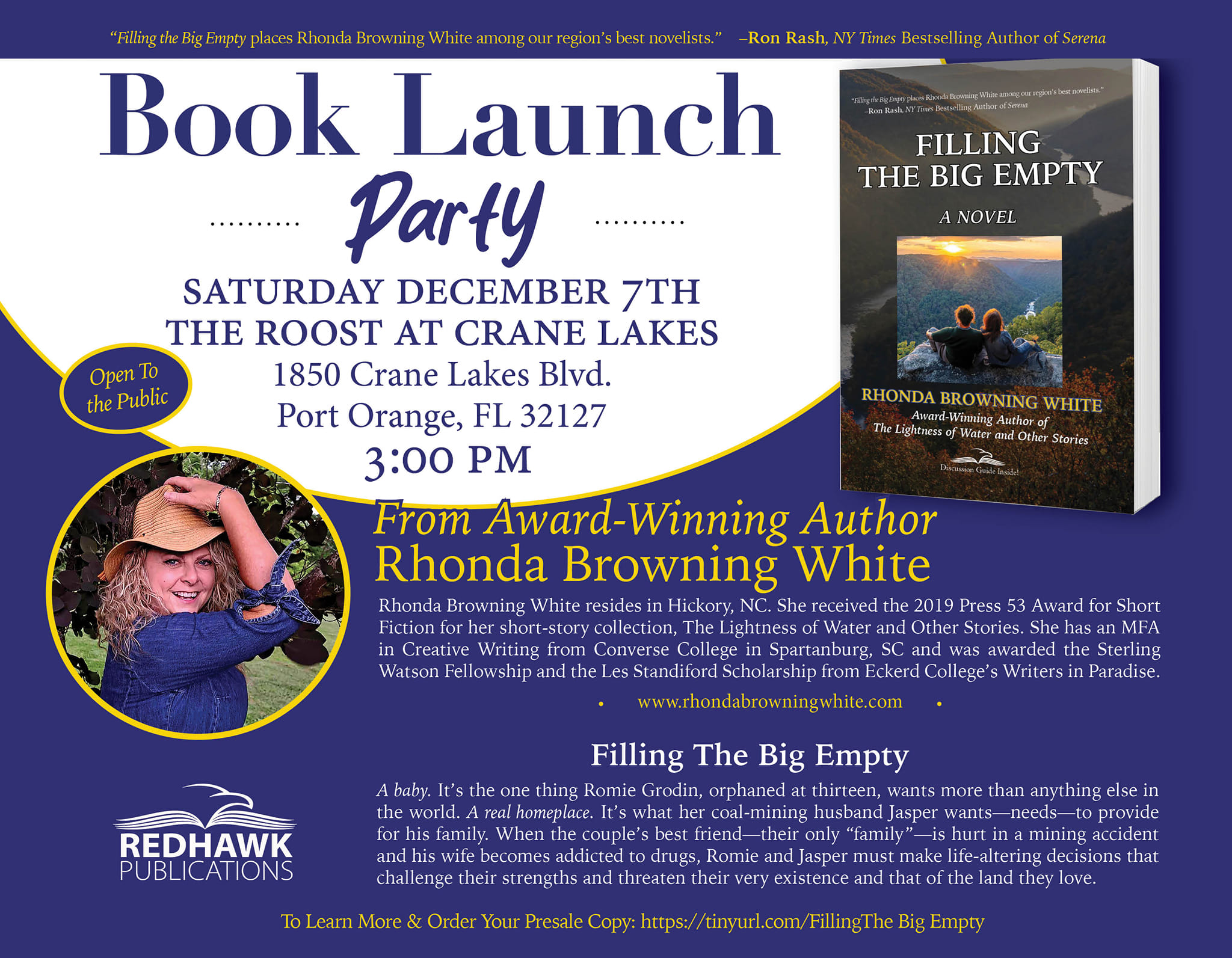
Florida Launch Party – You’re Invited!

I look forward to seeing family, old friends, and making new friends at this welcoming venue, The Roost at Crane Lakes. The food and fellowship are wonderful here, so bring friends, and stay afterward for dinner at this open-to-the public restaurant. Come, let me tell you a story!

And remember, signed books make GREAT Christmas gifts!

Contracing Covid: One Tip You Should Follow NOW!

As of this writing (January 17, 2021), according to the CDC, Covid cases are again on the rise.

For my “day job,” I work in healthcare. Part of my job requires me to work in a health center that does Covid-19 testing, sometimes even transporting Covid specimens to a shipment center. As such, I daily hear or see firsthand the crazy variety of symptoms (and sometimes complete lack of symptoms) that patients experience who test positive for this dastardly virus. I’m also privy to the thoughts a bevy of brilliant doctors who daily study this disease and its effects on the human body. Lastly, both my husband and I personally had coronavirus, so I can speak with experience about what it’s like. (Hint: it really sucks!) Therefore, I want to share with you some tips–one very important tip, really–to help you prepare for the possibility (some say likelihood), that you develop Covid-19.

Prepare! Prepare now! If, God forbid, you are diagnosed with Covid, your next instructions will be, “Go home. Isolate.” That means, Do Not Pass Go! Do not go to the grocery store. Do not go to the pharmacy (unless you’re visiting a drive-through pharmacy window to pick up a prescription). Go straight home and stay there, until you reach the end of your quarantine period AND are fever-free without the help of fever-reducing meds for 24 hours.  That also means you should prepare now for a Covid diagnosis.

What should you have on hand at home? For starters, right now—as in right this minute!—purchase these “Covid Cocktail” ingredients recommended by the College of Emergency Medicine. Unfortunately, hubs and I didn’t have all these items on hand, so we had to wait two days for an Amazon delivery to receive everything. We definitely saw an improvement in our symptoms with this cocktail, and neither of us ended up in the hospital, which is the ultimate goal. According to the College of Emergency Medicine (and several of my providers), there’s evidence that one week’s worth of these at-home remedies can reduce the severity of Covid-19 and therefore may help prevent hospitalization.

  • Vitamin D – suggest 4000-5000 units per day
  • Vitamin C – 2000 mg twice a day
  • Melatonin – any standard dose, twice a day
  • Aspirin 325 mg daily – NOTE: Do not take if you have a bleeding disorder or are already taking anticoagulation therapy (blood thinners), such as Coumadin.
  • Honey – 1 teaspoon or more daily (I recommend in a cup of hot tea.)
  • Zinc lozenges – every 2-3 hours as tolerated
  • Listerine or similar gargle – four times a day

It sounds like quite a list; however, I found the vitamins and zinc (as well as a few other known immunity enhancers) in one simple supplement called Immune Defense, on Amazon. (No, I don’t get a kickback if you buy this. Simply trying to help you out.) We also liked the little packets of Emergen-C, which made it easy to get an extra dose of vitamin C each day. In fact, we still take those now!

It’s also important to stock up now on comfort items you’ll want if you’re stuck at home for two weeks. Think about what you want or crave when you have a bad cold or the flu. Fortunately, we have grocery delivery where we live, and our list included chicken noodle soup, saltine crackers, oranges, tangerines, soft tissues, cough drops (necessary for that dry Covid cough which constantly tickles your throat), ibuprofen (Advil) or acetaminophen (Tylenol) for fever. Buy (or make ahead now and freeze) simple-to-prepare meals, as you won’t feel much like cooking if you develop Covid, yet you’ll still need to eat well to give your body fuel to fight the virus. Keep some cash on hand, as well as some small envelopes, so you can tip your delivery drivers without being face-to-face, or simply tip on your card. Tip generously. These folks are bravely helping you through an awful sickness.

Additionally, I recommend buying a pulse oximeter. You can find these in most pharmacies, or even some grocery and superstores. Shortness of breath is a scary, even life-threatening symptom of Covid, so you’ll want to keep an eye on your oxygen level. Head to the ER if your oxygen level drops below your doctor’s parameter (usually 92). If you do develop Covid, you should do daily deep-breathing exercises to help clear your lungs and raise your oxygen level. Simply take a very deep breath, hold it for five seconds, and let it whoosh out. Repeat six times. On the sixth time, cough out as hard as you can—but be sure to cover your mouth, or better still, step outdoors alone to do this exercise. Fresh air will do you good!

Here’s hoping you don’t get coronavirus, but if you do, I hope you’ll be better prepared now that you have these tips. Remember that prevention is best, so wash your hands, wear your mask, socially distance, and when it’s available to you, get the vaccine!

DISCLAIMER: I am not a doctor. Follow your doctor’s recommendations. Get vaccinated!

All Into the Pool!

GUEST POST BY . . . .

Valerie Nieman, author of To the Bones
(and other AMAZING books!)

To the Bones is an Appalahian eco-justice zombie love story.

Or a small-town paranormal mystery laced with dark humor.

Or ….

Anyway—my latest novel is a genre collision that begins when a traveler wakes up in a pit full of bones and develops into four mysteries entwined around a coal-baron family in West Virginia.

Darrick MacBrehon, orphan child become government auditor, gets off the highway and is ambushed at a sketchy convenience store. When he makes his way toward town, his bloodied head and staggering walk get him labeled as a zombie, but that’s only the half of it. Something happened down in that mine crack, something that unleashed latent powers. Darrick’s horrific and deadly talent comes just in time for him to team up with locals including Lourana Taylor (on a quest for her missing daughter) to take on the Kavanaugh family and their legendary ability to “strip a man to the bones.”

Mystery, horror, Appalachian tall tale, fantasy, environmental literature, romance, science fiction—even the classic western—can all be perceived in To the Bones. That’s a whole lot of horses to keep running in a more-or-less straight line.

Now, this isn’t my first venture into cross-genre work. My first novel, Neena Gathering, was a post-apocalyptic Appalachian love story modeled on a classic fairy tale. Other works, both prose and poetry, likewise have failed to color inside the lines, but none took in quite so many elements as To the Bones. So I knew very quickly, as these elements assembled, that I would have to be intentional about how I wrote the novel.

While I generally begin with character plus situation and let the story unfold organically, I feared I’d have a real tangle if I decided to “go with the flow.” One approach to handling a cross-genre work, the one I chose, is to follow a standard structure, the classic master story arc or “beat sheet” employed in movies and TV shows as well as bestselling novels. Events unfold at a regular pace, like a familiar chair you sink into. By hitting the “beats,” I could allow the tale to take in many disparate elements—even more than I’d envisioned when I started!

I also followed one of the oldest of story tropes: The stranger comes to town. A recurring theme in Westerns—think of “Shane” and those Clint Eastwood films—it represents what John Gardner called one of the two great stories. (The other is a person goes on a journey—Peer Gynt, Odysseus, Harry Potter, and the list goes on.) Of course, the two are part of a greater whole—the one who leaves on a journey inevitably becomes the stranger who comes to town.

The great story in all places and times is the Hero’s Journey, or “one myth,” as illuminated by Joseph Campbell. Like the “stranger” trope, it’s been traditionally viewed as a male enterprise. That’s changing, and about time. In To the Bones,

one protagonist is a mild-mannered fellow who stumbles into a deadly struggle for the soul of this mining town, while the other is a divorced local woman who assails the home-grown terror in hopes of finding her daughter.

There are other hazards while working with genre crossovers, including the inevitable stereotypes and cliches. You must be aware of them so that you can embrace and shift the conversation. In To the Bones, I drew on the “Wrong Exit” movies, zombies on the loose, and the trope of the all-powerful cattle/railroad/coal baron. To the Bones puts forward stereotypes only to undercut them, from the idea of outsiders stalked by “hillbillies” to the perception that every West Virginian is a coal miner. As Emily Dickinson reminds us, “Tell the truth, but tell it slant.”

As an Appalachian who’s heard all the jokes, I know that I’m playing with fire, but To the Bones relies on exaggeration — a zombie panic, vampires of a very different sort, and ecological devastation with an uncanny source. Beneath the fantastic elements, however, it’s a story of love and despair, about people who deeply love the land of their birth and rearing, and who clearly see the despoiling and destruction wrought by extractive industries that put food on the table. The damage wrought by centuries of exploitation can’t be addressed in one book or a hundred (check out West Virginia University Press’s amazing titles on this topic) but we can add some nuance to that conversation.

So how did I get started on this particular hybrid?

According to JRR Tolkien, in a letter written to W. H. Auden in 1955, he started crafting The Hobbit in the early 1930s when, on a whim, he wrote “In a hole in the ground there lived a hobbit” on the back of an exam he was grading.

Tolkien had no idea what a hobbit was. However, he just had to explore what this “hobbit” thing could be, why it lived in the ground, what foods it liked, how much hair it had on its feet. Over the next two years, Tolkien worked out the story, creating a tale for children. From that an entire universe sprang.

Writers can’t really tell, sometimes, where the idea began. Stephen King said, “I can tell you about fifty percent of the time where I got the idea. And the rest of it is totally like getting an idea in a dream and I can’t really remember where they came from.”

To the Bones began when I’d been unable to find the thread of a new story. In frustration, I made the comment that, back in West Virginia, if I’d been going to kill someone, then I would have tossed him down a mine crack like the one on my hill farm. My friend challenged me to do just that — and so it began.

From there, like Tolkein, I had a lot of things to discover. Who is this person? Why is he in the pit? Who will be his helpers and adversaries? I did not know, but trusted the story.

While I also write mainstream literary fiction and poetry, I believe fantastic literature in all its forms allows us to hold up a mirror to ourselves. The ways of the uncanny or alien can be contemplated when it’s too difficult to see those same flaws and failings in ourselves, whether that be racism or sexism, greed, violence or fanaticism.

To the Bones is a kind of a love letter to the genres that have thrilled me over the years, from Tennyson’s Arthurian cycle to Poe’s tales of madness, to Lovecraft and Bradbury and Le Guin and Herbert, and films from cult favorites to the classic. “Night of the Living Dead” is in here, but also “Night of the Hunter.” And Appalachia has produced a great body of folk tales and stories of otherworldly events—I think of Ruth Ann Musick’s classic “Tell-Tale Lilac Bush” —a rich vein that’s been tapped by writers from Manly Wade Wellman to Davis Grubb to Sharyn McCrumb.

Remember “Ghostbusters”? I’d suggest that just as in “Ghostbusters,” you can dare to “cross the streams” of literary genres. Great power lies there, if you can maintain a grip on story so that the disparate elements fuse into one lightning bolt of a novel.


Sanity in the Time of Covid

To say these are unsettling times would be an understatement. We’ve watched—are still watching—our country rippling and rolling as if a shaken blanket. Mass unemployment, racial tensions, and the daily fear of contracting a life-threatening disease is just cause for anxiety in the calmest of souls. As we watch the number of positive Covid cases rise (by the time I finish writing this, Florida, where I live, will top 100,000 cases and is pushing toward 4,000 deaths), we may think we’ve glimpsed the Reaper in our periphery.

I’m fortunate to work with a large group of brilliant healthcare providers, including a top infectious disease physician. Even so, the information shared by these knowledgeable doctors and scientists is sometimes contradictory. Our nation’s best are applying all they know and learn toward grasping and containing this slippery virus. How, then, can any of us manage our anxiety and remain emotionally upbeat as we navigate these strange, new roads?

I am not a psychiatrist or behavioral health specialist. Regardless, daily exposure to the facts and fallacies surrounding Covid, my husband’s job loss due to this pandemic, and the recurrent mass demonstrations in my county, has required me to face head-on my own anxiety. Here are some tips that have helped me cope with these fright-inducing events. I hope you’ll find comfort in some of the things that have helped me cope.

Focus on today. You live in the present, not the past or the future. It’s not balderdash to say each day is a gift. The fact that you’re reading this now instead of lying in a hospital on a ventilator is a very good thing, so be grateful for this time. Recognize that you’re in a safe place, you have food in your cupboards, a working phone or computer in front of you, and a day full of possibilities ahead. Remind yourself to remain in the here and now. You can deal with tomorrow when in gets here in the same, present-focused way you are handling today.

Disconnect. Facebook, Twitter, Instagram, CNN, Fox, etc., etc. Give yourself a break! It’s okay to turn off your television, or at least turn it to The Golf Channel, Food Network, or The Hallmark Channel. (No one has to know!) Check out Cartoon Network or Comedy Central. Give yourself a full day–or week–away from Twitter and Facebook. Hide or block that person whose political posts cause your blood to boil. Follow instead that hilarious friend who always posts cat comics or inspirational quotes. Read a funny blog post. Listen to upbeat music. Fling open your drapes and dance! (You might make your neighbors smile in the process.)

Hit the beach. Or the mountains. Or the lake. Or your backyard. Get outdoors and breath the air. This kind of freedom is free! It costs you nothing to sit by the water and listen to it flow over rocks or wash in as waves lapping your feet. Hike to a scenic overlook or guide your wheelchair along a path through a local park. Bask in the sunshine or stroll through a light rain, sans umbrella. Reconnect with nature. It’s uplifting and energizing, and couldn’t your battery use that kind of recharging?

Immerse yourself in a task or hobby. Now’s the perfect time to take a course in a subject that interests you. EdX has a long list of free courses from universities like Harvard, MIT, Yale, and Berkley covering everything from Roman architecture to video game coding. Pinterest is full of ideas for craft projects, painting, baking, and home décor. Start a novel, a poem, or personal journal. Now is also a great time to work on your landscaping or clean out your closets and garage. (You can donate what you don’t need to charity, and if that doesn’t make you feel good, what will!)

Pray or meditate—or both. Sometimes a moment of silence is the best thing you can give yourself. Strike a yoga pose like lotus or child’s pose, kneel by your bed, or sit comfortably in your favorite chair. Be still. Let your mind settle and push away any negative thoughts that come to you. Focus on a favorite uplifting quote or verse. Visualize a flitting butterfly or soaring eagle. Let peace settle around you and fill your spirit. Allow yourself to smile.

Phone a friend. If you find yourself wading through deep blues, reach out for help. Call the most upbeat person you know and tell them you need an uplift. Phone a pastor or spiritual advisor. Zoom or Facetime someone who always makes you laugh. Reach out to your doctor or therapist (most healthcare providers now offer phone or telehealth visits without having to leave your home) for a one-on-one counseling session. You have a lifeline. Don’t be afraid to use it!

For a list of free mental health services in your area, check out Healthy Place, here. 

How to Survive Self-Isolation: Seven Tips and an Important Warning!

Most cases of Covid-19 (a strain of coronavirus) have manageable (if uncomfortable) symptoms, similar to influenza or even a bad case of common cold, in people who have otherwise healthy immune symptoms. Covid-19, however, is highly contagious, so if you’re exposed, your doctor will certainly recommend self-isolation. How on earth do you handle that? How will you survive fourteen days trapped inside your home alone or—possibly more concerning—with your family? Here are some suggestions to make your quarantine more manageable and—dare I say it?—possibly pleasant!

First, don’t think of it as isolation. Mindset is everything! Consider this a two-week recuperation from all things hectic: no work frustrations, no crowds, no traffic jams . . . sounds heavenly, doesn’t it! Rest and hydration are two of the most important factors in recovery from this virus, as well as recovery from influenza, common cold, and other viral miseries. Be sure to take whatever meds your doctor prescribes, and eat healthy foods as tolerated, especially those containing vitamin C. Push fluids by keeping a glass of water beside you at all times, and take a sip every time you even glance at it. Wash your hands often, and disinfect hard surfaces in your home. This is especially important if you are quarantined with friends or family, as you don’t want to infect or re-infect one another.

Next, be prepared. No, I’m not talking about stocking up on a year’s supply of toilet paper! Truly, folks, don’t lose your mind here. While this may be a zombie-prepper’s dream, it’s only a break for a couple of weeks, and you’ve long needed that kind of R & R, haven’t you? There’s no need to go crazy here. Shop now for the comfort foods you prefer when you’re home with a cold or flu: chicken broth, soups, oatmeal, oranges, etc. And since you may not feel bad for the duration of your quarantine, purchase ingredients for a couple of recipes you’ve long wanted to try but haven’t had the time to make. That 28-ingredient homemade pasta dish, for example. If not now, when? Helpful hint: canned goods, dried beans and pastas, root vegetables like potatoes and carrots, and fruits like apples and citrus foods have a longer shelf life, so you don’t have to worry about spoilage over your two-week isolation.

toilet paper shortage

Quarantined without warning? No need to panic! Most large-chain grocery stores (Publix, Walmart, Kroger, etc.) offer home delivery. Pay by debit/credit card and ask the driver to ring the doorbell and leave your packages on your porch. (An Isolation – Please leave packages here sign on your front door will suffice. Be kind and tape an envelope containing a tip below your sign.) This is an excellent time to make use of your Amazon Prime account, because they’ll deliver anything you imagine to your door free of charge in a day’s time. And hey, most pizza delivery and Chinese food delivery places offer hot soups, fresh salads, and steamed veggies that’ll help support your immune system while you’re recovering during this mini-vaycay.

Catch up on entertainment. Now’s the perfect time to binge watch all those Netflix series that your friends have been talking about. And that stack of to-be-reads on your nightstand? Curl up with a cup of tea, a warm blanket, and a fur-baby by your side, and you’re in self-care heaven!

Enjoy a spa day at home. Once you’re on the road to recovery, enjoy a steamy bath with a cup of Epsom salts, dried oatmeal, bath oil, or lavender buds. Turn off the lights and burn a scented candle, then follow your relaxing soak with a slathering of rich body cream. Next up? A self-serve mani-pedi, perhaps while watching that chick-flick only you wanted to see.

Do something creative. Now’s the time to drag out that cross stitch kit or art project that’s been hiding out in your spare closet. Write a poem or a story. Send a handwritten letter to a parent or favorite aunt. Organize a drawer or rearrange a shelf. Declutter a closet and start a box for charity. Be sure to limit physical activity to thirty minutes or so at a time. You don’t want to overdo it while you’re recovering.

Reconnect with your family. Isolated with your spouse or kiddos? Once everyone is feeling up to it, break out the Monopoly board or Yahtzee game. Teach your kids some card tricks. Watch a classic movie—you know the one—the one that was your favorite when you were their ages. (Prepare for eyerolls and groans, as well as laughter.) Over a steamy bowl of soup at the dining table, take turns answering “200 (Not Boring) Questions To Ask To Get To Know Someone Better” from this great list from Women’s Health. Ten years from now, you’ll be laughing as you say, “Remember how silly we were that time we were all isolated with coronavirus?”

While no one wants to be kept home sick, with the right attitude toward rest and recovery, you can make the best of your quarantine while avoiding cabin fever. By the time your two-week self-isolation is over, you’ll be recuperated, relaxed, and ready to return to work or school with a self-indulgent smile.

IMPORTANT: If you experience worsening symptoms such as fever of 102 or higher while on fever-reducing medication such at Tylenol or Advil, difficulty breathing, delirium, or chest pain, call or your doctor or 911 immediately. You may be experiencing a true medical emergency.

The Five Most Influential Books When I was a Young Reader (that would work for today’s teens, too)

Guest Post
by
Mary Hastings Fox

Mary Fox

Do today’s teenagers still read books, or has social media replaced print completely? Studies show that, by college, most are reading because they must. When they do read for pleasure, they are more likely to prefer books where kids must fend for themselves or die (The Lord of the  Rings or The Hunger Games.)  I thought it might be fun to think back to my favorite young adult books to see how things have changed.

1. Nancy Drew and the Hidden Staircase by Carolyn Keene ( Mildred A. Wirt)

A first favorite was Nancy Drew, and I stuck with her all through high school. Mildred Wirt, ghostwriter “Carolyn Keene” for 23 of the first 30 Nancy Drew books, was an independent, resourceful woman herself. She endowed Nancy and many of her other heroines with these same qualities. The message was that any girl could be anything, and this is part of what made her so beloved with young readers. But there was more. The relationship of distant fathers and their determined daughters can always fulfill a young girl’s fantasy about who she will be as a woman. While Nancy is loaded with brains and wit, she is often isolated in a dangerous world, and it’s often not clear that any help will come in time, if ever. In my mind, this is the reason why Nancy Drew is still wildly popular after 75 years – she knows that her choices can be wrong and that she doesn’t know everything she needs to. She is essentially on her own and still, she persists!

2. To Kill a Mockingbird by Harper Lee

The book’s protagonist, Scout Finch, is a precocious, pre-teen tomboy, trying to understand the nature of bigotry in the 1930’s South.  Her father Atticus is an impossibly good and wise man wise who holds her hand as layers of people’s manners and charm fall away to expose the moral core of bigotry and violence underneath.  There are many of the title’s “mockingbird” characters in this novel–gentle, innocent victims of bigotry and the evil nature of mankind. The real mockingbird is the myth of human goodness. The town is forced to see each other’s racism and stubborn beliefs about class and race.

This book is, ideally, read at a time of the reader’s own coming-of-age. It’s also a time in life when kids are beginning to understand the greater worlds of literature. Atticus is the anchor to integrity and morality that centers his children during violent storms that threaten everything they know. In short, he’s the perfect father.

The message of love and tolerance amidst social pressure is important, but the main hooks for the teen reader are the drama of the story, the author’s fluid prose, and her exquisite characters.

3. Nero Wolfe by Rex Stout

…was rarely read by the girls of my generation. The heroes are two men: Archie Goodwin–earthy, gutsy, gritty, and very masculine–the wise-cracking gumshoe detective and the foil of his boss, Nero Wolfe. Wolfe is an overweight, orchid-loving intellectual and a gourmand. He is also a recluse who hates to work, and who, book in hand, prefers never to move from his chair except for dinner. Most women in the series are merely decorative, as Wolfe, among his other shortcomings, is a misogynist who barely tolerates Archie’s womanizing. So why would a girl read this stuff? Why to fix them, of course. I was alternately Archie and Wolfe in the stories and, being far less lop-sided than they were, I was better than either of them at solving the murders, at understanding everyone’s motives, and at making my life work. What girl could resist?

4. Murder on The Orient Express by Agatha Christie

Agatha’s most famous protagonist was Hercule Poirot, and he was my favorite. He constantly referred to his approach to solving mysteries as using his brain’s “little gray cells.” Christie was no slouch in this department. She was an exceptionally smart and gifted writer, deftly combining sharp structure with a psychological spin. Her novels streamed along with unique but believable dialogue, flawless mood-setting, and carefully constructed murder plots that to this day serve as blueprints for modern detective writers. She left a library of work that’s both intelligent and timeless. I can pick up one that I read decades ago, and it feels fresh and timeless. Murder and good writing—a combination that made the “Queen of Crime” one of the best writers in history–and on top of that, she managed it while staying G-rated. I’ve still never met a teenager who didn’t say they loved the book when closing the last page on Poirot.

 5.  Grendel  by John Gardner

This is one of my favorite coming-of-age novels, and, in my opinion, a masterpiece that should be read by anyone who enjoys reading fiction. The way Gardner takes a character that you thought you knew and adds layers upon layers of depth to it is absolutely astounding. This is a fantasy book but it’s not light reading for a teen-ager.

Grendel’s internal conflicts drive the story in one of the best character analyses I’ve ever read.  Grendel is not really a story about a monster, it’s the story of an isolated person trying to make sense of the world as a hated and tortured adolescent. While the hero (Beowulf) still wins in the end, Grendel, the monster, is the protagonist, and it’s his last thoughts that stay with us. “Grendel is dying and so may you all,” he says, which is, after all, is consistent with the nature of a dragon. (Sound like any teen-agers you know?)  At seventeen, I went off to college with a new understanding of the complexity and foreknowledge of what it might be like to be a human.

About Mary . . .

Mary Hastings Fox studied literature and poetry before becoming a psychologist. She is an associate professor of psychology and education at the University of Maryland and has had her own psychology practice for 30 years. In addition to writing other people’s true stories, she published a textbook and numerous journal articles on organizational psychology. Most of her writing is now is deeply rooted in nature. The Last Skipjack is her first novel, with a sequel in progress.


And a Note from Rhonda

You’ll find that the hyperlinks above lead you to online shopping at this essay’s featured independent bookstore, Scuppernong Books in Winston-Salem, North Carolina. Scuppernong is as warm and welcoming as any bookstore you’ll find. It also features a community bar with hot coffee, cool wine, and craft beer. Check their website regularly for featured author readings (including mine!) and other events! #shopindie


Building an Author Platform

Guest Post by Eliot Parker

What is an author platform, and why is it necessary? An author platform is simply the ability to sell books because of who you are, as an author, and the ability to reach readers in a variety of ways.

Why does this matter for authors? The evolution of technology in publishing (through Amazon, Smashwords, and other online publishing platforms) has made it easier for authors to produce work and make it available to readers. However, that also means the publishing medium is more crowded than ever before, with thousands of writers hoping their works get noticed by readers.

In 2016, the Washington Post conducted a nationwide study of book publishing, accounting for all the various books published that year in all platforms and formats. The study found that over 600,000 titles had been produced that year. That means that over 600,000 books had been published in 2016 and were looking to attract readers and interest.

As publishing becomes more accessible to more authors, getting work noticed by readers is becoming more complicated. However, building an author platform is more than just finding readers and selling books. Building a complete author platform also means staying aware and abreast of opportunities for participation in writing workshops, conferences, book festivals, and other events directed towards the growth of the individual writer.

In terms of book sales, here are places many writers should consider:

  1. Gift shops at state parks – Almost every state park with lodging has a gift shop. This can be an excellent place to sell books, especially if you are a native of that state. Often, your book will be one of the few featured, giving it more visibility. Plus, most state parks buy books in large quantities.
  2. Creative arts “stores” – Often, these stories are distributors of items other than books made my local artisans. Some of the distributed items include signs, canned goods, crafts, and other homemade items. Do not be afraid to approach the manager/owner of the store and ask about selling books in the store. Often, the manager/owner has never been approached about selling books as part of their local items, and they are more receptive to the idea.
  3. Craft festivals and fairs – These can be excellent places to sell books. The vendor table fees can be substantial, but the potential to sell books is tremendous. Fairs and festivals feature plenty of people selling food, handmade items like wreaths and yard signs, but few of those events feature authors selling books. Readers attend those events as well, and they will be thrilled to see an author participating. A note of caution: often festivals occur for several days, and the days can be twelve-hours in length or more. Stamina is a requirement to participate in events such as this.

For development opportunities for the individual author, I recommend the following:

  1. Attend one large, national writing conference each year. This is a great way to network with other authors, attending readings, meet agents and publishers, and recharge the creative energy needed to write. Pick a different conference in a different part of the country each year, so you are free to explore more new places with the new friends you will make.
  2. Subscribe to BookBuzz. This website offers paid promotional services. Each month, they will send an email with many free opportunities to sell your works or free webinars and seminars available to authors that focus on the “business” aspects of writing and publishing.
  3. Subscribe to Authors Publish E-Magazine. This magazine comes to your inbox several times a month and features calls by publishers looking for new work as well as literary journals that are currently accepting submissions. The subscription is free and well-worth it.

There are other ways to build an author platform. Having an active social media presence (Facebook, Twitter, Instagram) is important, but there are other ways as well. Building a platform takes time and consistent effort on the part of the writer. In fact, as a writer, I have a goal of completing two tasks each day that will help me build or enhance my platform. That goal is attainable and does not require copious amounts of time to be taken away from my writing or other tasks.

Feel free to contact me if you’d like to talk more about building an author platform.

eliot Parker

Eliot Parker is the author of four novels, most recently A Knife’s Edge, which was an Honorable Mention in Thriller Writing at the London Book Festival, and is the sequel to the award-winning novel Fragile Brilliance. He is a recipient of the West Virginia Literary Merit Award, and Fragile Brilliance was a finalist for the Southern Book Prize in Thriller Writing. He recently received with the Thriller Writing Award by the National Association of Book Editors (NABE) for his novels. Eliot is the host of the podcast program Now, Appalachia, which profiles authors and publishers living and writing in the Appalachian region and is heard on the Authors on the Air Global Radio Network.

You may purchase Eliot’s award-winning books HERE.

Blog at WordPress.com.

Up ↑

www.rhondarandall.com

Author of deliciously decadent stories.

Discover WordPress

A daily selection of the best content published on WordPress, collected for you by humans who love to read.

Suzanne Heagy

Small lives, awkward moments, immense relief.

My Blog

This WordPress.com site is the bee's knees

The View from Goose Hill

A Second Look at What I Thought I Knew about Life

The Skinny Poetry Nation

For those who love, are learning, and have mastered the Skinny Poetry Form

The Backwords Writer

Writer Rosa Sophia

Storyshucker

A blog full of humorous and poignant observations.

Lucy Mitchell Author

Romance Author

Hawaii Pacific Review

Literary Journal of Hawaii Pacific University

Sliver of Stone Magazine

2010-2018 ARCHIVES

#amnoveling

Cathy Day's course on novel-writing at Ball State University

10,000 Tons of Black Ink

Featuring quality literary or experimental fiction and creative non-fiction.